
When it comes to building more inclusive economies, the conversation often turns to innovation — new technologies, products, and platforms promising to transform access to finance. But behind the buzzwords lies a deeper question: what does real, lasting change look like when it comes to serving the world’s underserved?

Innovation of Microfinance - Women agents of a microcredit institution show their daily collection which is recorded in an electronic device. A microcredit initiative that took off about 17 years ago has empowered 24,412 women in this block about 80 kms away from Kolkata, transforming their economic and social status. By Sudipto Das, India
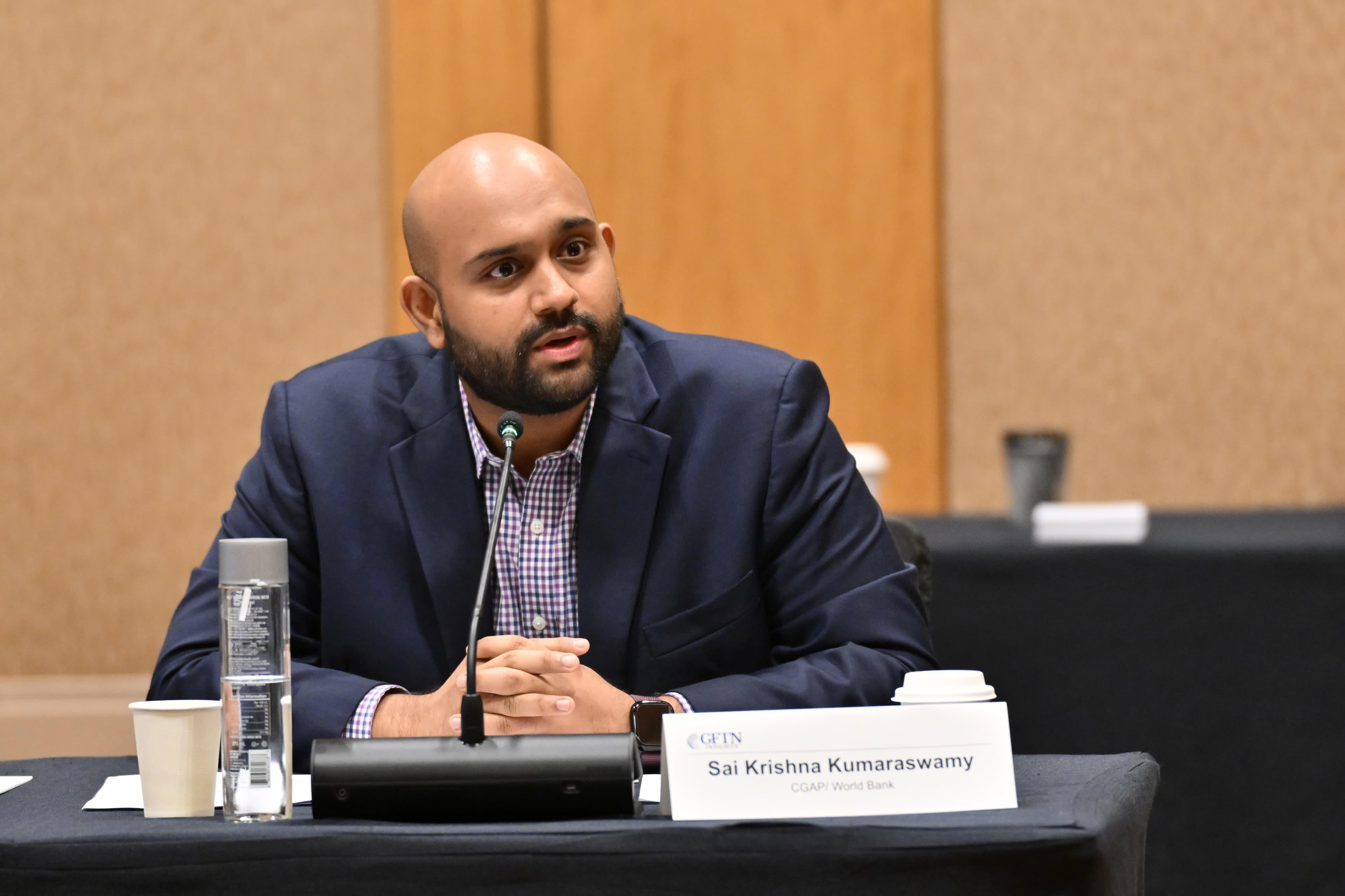
For the launch of our Impact Report 2025, themed “Dare to Transform,” we spoke with Sai Krishna Kumaraswamy, Financial, Asia Regional Lead at CGAP, a global platform housed at the World Bank that advances financial inclusion through independent research and partnerships. His message was both hopeful and cautionary: progress has been made, but the journey is far from complete.
“Remarkable progress in financial access has been made in the last 15 years. In low-and-middle-income countries, 3 in 4 adults have a bank account fuelled by digital financial services. Yet 1.3 billion people remain unbanked. Now is the moment for private players to step up and not retreat from their impact commitments.”
Big Progress Through Digital Finance
Over the past 15 years, digital finance has revolutionized the way low-income and marginalized groups engage with money, fulfilling its promise of being more accessible and affordable. The latest Global Findex Report 2025 by the World Bank shows how mobile banking, digital wallets, and agent networks have dramatically lowered barriers to entry, cutting costs and expanding reach to women, rural populations, and informal workers.
For many, the experience of financial empowerment goes beyond numbers. It’s about dignity, convenience, and autonomy.
As Kumaraswamy explains:
“There's something about being able to get money at the click of a button using a phone in the confines of your home, especially for people who have been historically neglected, excluded, sometimes abused. Walking into a bank can be very intimidating, for people who don’t know how to fill out forms, don’t speak English, or for women who don’t know how to navigate these male dominated spaces. User experience and customer journey play a big part. We need to look at impacts in all of these dimensions.”
These new pathways to access, however, are not without their pitfalls. While digital tools can bridge gaps, they can also widen them when affordability, connectivity, or digital literacy lag behind.
From Counting Activity to Understanding Real Impact
The rapid rise of fintech innovation has brought undeniable momentum — but it hasn’t lifted all boats. Rural communities, informal workers, and women often remain on the periphery of financial ecosystems that weren’t designed with their realities in mind.
“The lives of excluded, low income, informal populations are extremely complex in ways that we just can't fathom,” notes Kumaraswamy. “When you are financing gig workers, women who run a household enterprise, or young people chasing creative pursuits, you just cannot reduce them to a single credit score. True impact is broader. What is the price you would put on being able to illuminate your home, or to not use dirty fuel in your kitchen, or to not miss school because you can't afford a textbook?”
The danger, he adds, is that digital credit while expanding access can also amplify existing risks. The biggest is over-indebtedness as instant, low-friction lending makes it easy for borrowers to take multiple loans and fall into debt stress, especially in weak economies. Fraud, scams, and digital abuse are growing concerns, often spreading faster than regulators can respond.
“Because regulation often lags behind innovation, risky products can scale fast and reach millions before safeguards are in place.” adds Kumaraswamy.
This underscores a pressing need for the industry to move beyond counting transactions or downloads as metrics of success, and move towards a more inclusive and nuanced approach to credit. For too long, we have equated access with empowerment and mistaken usage for well-being. Let us acknowledge the lived realities behind every loan and understand when, how, and for whom access to finance makes a difference.
The Need for Patient Capital
Governments, facing mounting debt pressures and competing priorities, can only go so far in funding innovation or scaling risks.
“This is where the private sector becomes indispensable,” says Kumaraswamy. “By bringing domain expertise, flexibility, or risk appetite that public funders often lack, private investors can help scale promising models, bring operational discipline, and inject innovation capability.”
But not all capital is equal. The kind of finance that has the power to change lives is patient capital — money that stays the course, absorbs early risks, and invests in understanding the real needs of clients before seeking returns. Private investors have an equally important role to play here.
“The journey is far from complete,” Kumaraswamy reflects. “The gains have slowed as the remaining unserved populations are more remote or marginalized. At this juncture, the type of private capital matters. We need investors who take time to understand complex client lives, adapt, and stay long enough for models to mature and prove both commercial and developmental value.”
From Progress to Transformation
The global financial inclusion story is entering a new chapter — one that demands not only innovation but intentionality.
That means designing products that reflect the realities of informal economies, creating safeguards against digital harm, and ensuring that underserved groups are not only included but empowered.
As we unveil our Impact Report 2025, themed “Dare to Transform,” we echo this call for courage to reimagine finance not merely as a tool for inclusion, but as a catalyst for enduring change. As a private investor and lender, we see this moment not just as a test, but as a prompt to innovate. While public funds dwindle, private players have a stronger role to play beyond filling the funding gap, imagining new approaches and surfacing more evidence of outcomes.